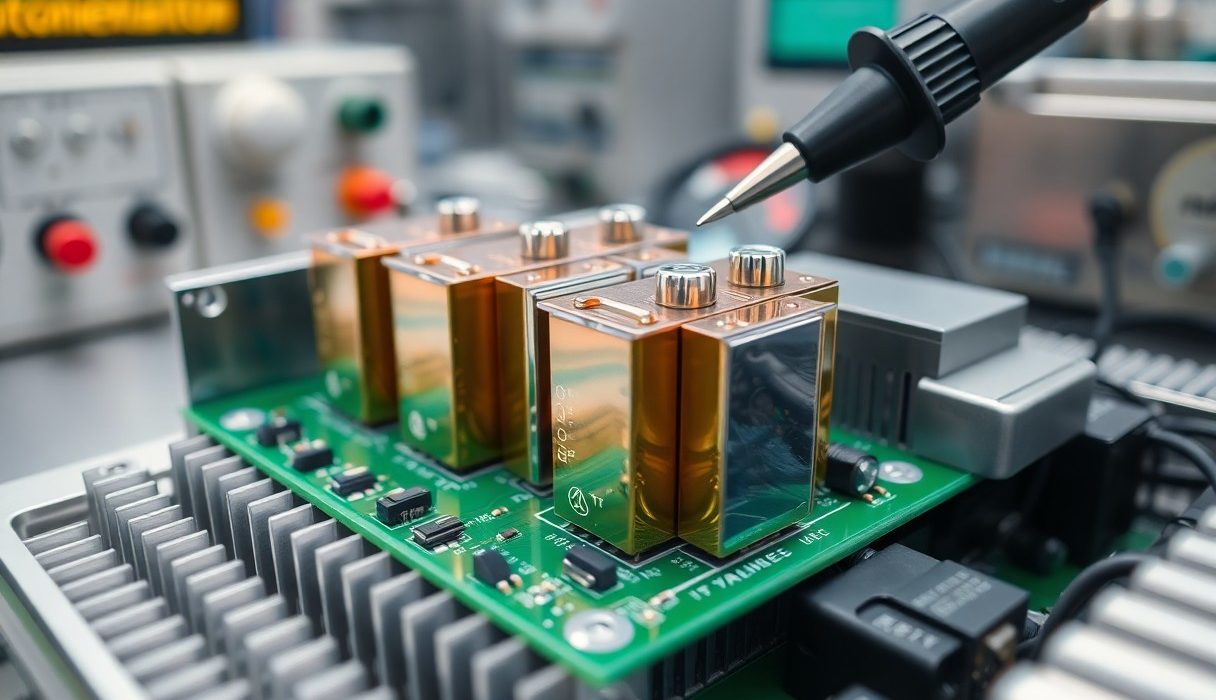
Solid-state relays (SSRs) give you contact-free switching for sensitive diagnostic and therapeutic equipment, offering high reliability and long service life with isolated control and precise timing to improve performance and reproducibility; however, you must mitigate leakage currents and thermal runaway risks through proper selection, heat sinking and validation to protect your patients and operators and ensure safety while maintaining regulatory compliance.
Types of Solid State Relays
You will encounter several common architectures: AC SSR (triac/thyristor) for mains switching, DC SSR (MOSFET) for polarity-sensitive loads, PhotoMOS for low-voltage signal isolation, plus hybrid and high-power modules designed for heating and motor control. In practice, you pick based on load type, required isolation, switching speed, and how much leakage current or on‑state voltage drop your circuit can tolerate; industrial AC SSRs often list ratings like 25-100 A at 240 VAC, while PhotoMOS parts typically rate to tens of volts and a few amps.
Examples: a lab incubator heater commonly uses a 25 A, 240 VAC AC SSR with a heatsink and snubber network to handle inductive spikes; an electrochemical analyzer may use PhotoMOS relays for µA‑level signals to avoid contact contamination. Compare datasheet curves for thermal derating and inrush handling when you evaluate options.
| Type | Typical specs / use cases |
| AC SSR (Triac) | 24-600 VAC ratings, common currents 2-100 A, best for resistive mains loads; zero‑cross variants reduce EMI. |
| DC SSR (MOSFET) | Up to 200 V+ DC, low Rds(on) options for higher currents, used for polarity‑sensitive or high‑speed DC switching. |
| PhotoMOS | Typical load voltages up to ~60-150 V, currents 0.1-2 A; ideal for low‑level signal switching and tight isolation needs. |
| Hybrid SSR | Combines mechanical and solid‑state elements for lower on‑resistance and higher surge capacity; used where low loss and reliability both matter. |
| High‑power modules | Chassis-mount SSRs rated 25-400 A, often require heatsinks and forced air; used in large heaters and process equipment. |
- Zero‑cross SSRs minimize EMI for resistive loads.
- Random‑turn‑on SSRs allow phase control for dimming and precise power control.
- Leakage current and off‑state voltage affect patient‑safety circuits and low‑current measurements.
- Thermal derating dictates mounting and heatsinking requirements.
PhotoMOS Relays
You can rely on PhotoMOS relays when you need galvanic isolation with low parasitics for instrumentation: many devices handle load voltages around 60 V and continuous currents of 0.5-2 A, with off‑leakage in the microampere range. Manufacturers like Panasonic and Renesas publish families where on‑resistance and leakage vary; for example, a signal PhotoMOS may specify off leakage <1 µA and on-resistance measured in ohms, while higher‑voltage variants trade higher on‑resistance for increased blocking voltage.
Because PhotoMOS parts are small and solid‑state, you get no contact bounce, long service life, and compact PCB mounting – desirable for multi‑channel lab instruments. However, be aware of limited current capacity and thermal derating; if you push a PhotoMOS near its max current without adequate PCB copper for heat dissipation, you risk increased resistance and accelerated failure.
Voltage and Current Ratings
Datasheets list both maximum blocking voltage and continuous current, but you have to read the curves: AC SSRs will show an RMS voltage rating (often 240-480 VAC) and a surge rating for short transients, while DC SSRs and PhotoMOS parts quote maximum DC block voltage (for example, 60-200 V) and continuous current limits. Practical design requires checking on‑state voltage drop (or Rds(on) for MOSFET SSRs) because a 1-2 V drop at tens of amps means several watts of dissipation that must be managed.
Derating is crucial: a module rated at 25 A at 25 °C may be rated for far less at 60 °C unless you add a heatsink or forced air. For instance, many panel‑mount SSRs expect a heatsink to stay below junction limits; if you plan to switch heaters or motors with high inrush, select devices with explicit surge handling or use series limiting to avoid premature failures.
More detail matters: examine the leakage current spec for your measurement circuit, the time‑to‑failure vs ambient temperature, and the thermal resistance (θJA/θJC) so you can compute required heatsinking; for switched capacitive loads or motors, specify SSRs with rated inrush or add soft‑start to avoid overstressing the semiconductor junctions.
Knowing how voltage, current, leakage and thermal limits interact will let you select the right SSR and heatsinking strategy for your medical or laboratory application.
Tips for Selecting Solid State Relays
When choosing Solid State Relays for medical or laboratory systems, focus immediately on performance parameters that affect patient safety and measurement integrity: isolation voltage (aim for ≥4 kV in many patient-accessible circuits), leakage current (target <1 µA for electrode/sensor paths, <50 µA for low-current signal chains), and continuous current ratings sized 25-50% above your maximum steady-state load. For example, a 24 V incubator heater that draws 1.6 A should use an SSR rated 2.5-4 A continuous with a surge rating of 10-20 A and a defined thermal resistance so you can calculate heatsink needs.
- SSR type – AC (triac/thyristor) for mains, DC (MOSFET) for low-voltage polarity-sensitive loads
- On-state characteristics – RDS(on)/voltage drop and resulting power dissipation
- Off-state leakage – specify absolute µA limits for measurement circuits
- Isolation and safety approvals – IEC 60601/EN 61010, UL where applicable
- Thermal management – heatsink, mounting, and ambient derating data
- Control interface – logic-level drive, opto-isolation, input current
- EMC and switching behavior – dv/dt ratings, snubber recommendations
Application Requirements
Match the SSR architecture to the load: choose AC SSR (triac/thyristor) when switching mains up to 240/480 VAC with zero‑cross switching, and prefer DC SSR (MOSFET) for precise polarity-sensitive control under 60-100 V DC. If you need pulse-width modulation at kHz rates (for example, motor speed control or high-resolution dosing pumps), pick MOSFET-based SSRs with documented switching times in the microsecond-millisecond range and low switching losses; avoid triac SSRs where phase-angle control or fast off-on cycles are required because their conduction and recovery characteristics limit high-frequency performance.
Also verify control compatibility and transient immunity: ensure the SSR input accepts your logic (3.3 V vs 5 V) and that the device has specified surge and transient handling (IEC 61000-4 series) if your application sees switching spikes. For loads dissipating more than ~1 W inside the SSR you should plan a heatsink or board-mounted thermal path – calculate power dissipation from RDS(on) or on‑state voltage and confirm the required thermal resistance from the datasheet to avoid thermal runaway under your worst-case ambient.
Environmental Considerations
Account for operating temperature, humidity, vibration, and ingress protection early: many industrial SSRs are rated −40 °C to +85 °C, but laboratory enclosures and sterilization cycles can push components hotter or expose them to condensation. If your device will be in a humid incubator or autoclave-adjacent cabinet, select sealed or potted SSR packages with appropriate IP ratings or specify conformal coating; in centrifuges and point-of-care instruments check mechanical qualification to IEC 60068 and choose parts with low microphonic sensitivity.
Plan for environmental derating and EMI control: SSR current capability typically falls with rising case temperature, so follow datasheet derating curves (for example, many SSRs require heatsinking above 50-60 °C ambient) and include snubbers or RC filters when switching inductive loads to limit dv/dt and radiated emission. In low-current measurement paths, off-state leakage current and internal snubber networks can distort signals – use bleeder resistors or select SSRs with guaranteed low leakage (<50 µA) to preserve measurement accuracy.
Recognizing that the best choice blends electrical ratings, thermal strategy, environmental qualifications, and the required approvals will let you specify an SSR that meets both performance and safety needs.
Step-by-Step Guide to Installation
Installation Checklist
| Step | Details |
| Select SSR | Match load type (AC resistive, AC inductive, DC); choose an SSR rated ≥ 150% of steady-state current (e.g., an 8 A heater → 12 A SSR). Verify input drive range (typical 3-32 VDC, input current 7-20 mA) and off-state leakage current specifications for medical circuits. |
| Mounting & Thermal | Plan heat-sinking: use thermal compound, follow torque specs (terminal/heat-sink screws ~0.5-0.8 N·m), and allow airflow. Apply derating per datasheet (typical ~1-2%/°C above 25°C). |
| Wiring | Use appropriate wire gauge (e.g., up to 10 A → 16 AWG; 10-20 A → 12-14 AWG). Separate control and power runs; use shielded control cable for runs >1 m. Tighten terminals to manufacturer torque. |
| Protection | Install time-delay fuses sized ~125% of steady current for thermal loads, MOVs/TVS for surge suppression, and RC snubbers for inductive loads per SSR datasheet. |
| Verification | Perform dielectric and leakage tests per IEC 60601‑1 (patient-connected systems), functional switching tests under expected load and ambient, and a thermal run at full duty with a thermal camera or sensors. |
Preparing the System
Begin by confirming the SSR’s electrical and safety specs against your application: check maximum load current, on‑state voltage drop, and off‑state leakage current. For medical equipment that touches patients or patient‑connected circuits, verify compliance with IEC 60601‑1 and select SSRs with documented dielectric strength (for example, dielectric tests on the order of 4 kV) and leakage characteristics that meet your allowable microamp-levels; typical industrial SSR leakage of 0.5-3 mA may be unacceptable in these systems.
Next prepare the physical installation area: clean mounting surfaces, apply a thin, even layer of thermal compound to the SSR base, and size the heat sink per datasheet thermal resistance (θJA/θJC). You should plan mounting hardware torque (~0.5-0.8 N·m for M3 terminals), maintain required clearance/creepage distances per working voltage (often 4-8 mm depending on class), and ensure ventilation so the SSR case temperature stays below rated limits at expected ambient – otherwise derate the device by the manufacturer’s specified 1-2%/°C.
Wiring and Configuration
Route and terminate control wiring separately from mains conductors: run control cables in a different conduit or maintain >20 mm separation to minimize induced noise. Drive the SSR input with the specified voltage and current (common ranges 3-32 VDC, input current ~7-20 mA); for a 5 V logic output provide a series limiting resistor or use a driver that supplies the required LED current. On the output side, use wire gauges sized for continuous current (example: choose 14 AWG for up to ~15 A; 12 AWG for 15-20 A), and fit time‑delay fuses rated about 125% of steady current to accommodate inrush. Tighten load terminal screws to the recommended torque and use insulated covers for exposed mains terminals.
Decide between zero‑cross and random‑fire SSRs based on load behavior: for purely resistive heaters and to reduce EMI choose zero‑cross SSRs; for phase control or fast PID-driven temperature loops use random‑fire SSRs or a dedicated phase‑control driver and ensure the SSR and heat sink can handle higher switching losses. If your load has significant inductance (motors, solenoids), add an RC snubber or MOV across the load per supplier recommendations to limit voltage overshoot and protect the SSR.
More detailed wiring practices include placing a small series filter or ferrite bead on long control leads, using twisted pair for control to maintain common‑mode immunity, and routing mains and control grounds so that return currents do not flow through sensitive analog or patient‑isolation paths. Additionally, validate the system with thermal monitoring at expected duty cycles and perform a leakage current check under worst‑case conditions; these steps will catch hotspots, improper grounding, and excessive leakage before deployment.
Factors Influencing Performance
How your SSR performs in a medical or laboratory environment is determined by device architecture, load type and the operating envelope you design for. Component-level parameters like RDS(on) (for MOSFET-based SSRs), OFF-state leakage (critical for patient-connected circuitry), and the vendor-specified isolation voltage set hard limits on loss, safety margins and test procedures; for example, MOSFET SSRs can exhibit RDS(on) values down to the tens of milliohms range, while triac-based units typically show a 1-2 V on-drop under load. Environmental and system factors – ambient temperature, forced-air cooling, PCB thermal vias, and proximity to sensitive analog front-ends – interact with device specs to change steady-state temperature, leakage and noise behavior, and standards such as IEC 60601 enforce leakage and isolation requirements that frequently push selections toward lower-leakage parts and robust thermal management.
- RDS(on) – controls conduction losses and heat at DC/low-frequency loads
- OFF-state leakage – drives compliance with medical leakage limits and affects safety circuits
- Thermal resistance – junction-to-case and case-to-ambient determine heatsink needs
- Switching frequency – affects switching losses, EMI and suitability for PWM control
- Isolation voltage – defines creepage/clearance and patient-safety margins
Any marginal choice in thermal design or switching strategy will show up as drift, elevated leakage or intermittent trips during endurance testing, so you must validate SSR behavior across worst-case current, temperature and duty-cycle combinations.
Heat Dissipation
You should quantify conduction and switching losses to size thermal management correctly: for a MOSFET SSR with RDS(on) = 50 mΩ carrying 4 A, conduction loss is I²R = 16 × 0.05 = 0.8 W, and if you switch at higher frequency expect switching losses to add another 0.2-1.5 W depending on dv/dt and gate-drive characteristics. Targeting a maximum temperature rise of 20-40 °C above ambient means selecting a thermal path with combined junction-to-ambient resistance low enough that P × RθJA stays within that limit – for 1.5 W dissipation you’d aim for RθJA ≤ ~13-27 °C/W. Use PCB copper pours, thermal vias, and mechanical heat-sinking; in many benchtop analyzers, adding a small anodized aluminum sink or forcing 1-2 m/s airflow reduces case temperature by 10-25 °C compared with natural convection.
When you design mounts and enclosures, emphasize reliable heat transfer: place SSRs on dedicated copper areas, use thermal pads or gap fillers where direct mounting isn’t possible, and include temperature sensing (an RTD or thermistor on the case) for thermal derating in firmware. Overheating can lead to thermal runaway in high-current MOSFET stacks or premature opto-isolator degradation, so implement both passive measures and firmware limits (current/time averaging and trip thresholds) to protect patient-connected equipment and avoid long-term reliability issues.
Switching Frequency
The switching regime you require dictates SSR topology: zero-cross SSRs are fine for resistive mains heaters and offer low EMI for line-frequency loads, but they won’t work for duty-cycle control below the mains half-cycle or for fast PWM. If you need to modulate power at Hz-kHz rates (for temperature control or rapid pulsing), choose random-turn-on MOSFET-based SSRs or photomos that list a usable bandwidth – many MOSFET SSR modules support tens of kHz for power control, while signal-level photomos can exceed 100 kHz for low-current switching. For example, using a zero-cross SSR to attempt 500 Hz PWM will produce unacceptable latency and indistinct power steps; instead select an SSR explicitly specified for the frequency range you intend to use.
Operating at higher switching frequencies increases switching losses and EMI, so you must trade off responsiveness against thermal and emissions budgets: switching at 10 kHz with 24 V steps can significantly raise dissipation from dv/dt-related energy loss and generate radiated harmonics that interfere with ADCs and instrumentation. Implement snubbers, RC damping networks (values typically in the tens-hundreds of ohms and nanofarad range depending on the load), and proper PCB layout to control ringing, and validate conducted and radiated emissions to the levels your lab or clinic demands.
Pros and Cons of Using Solid State Relays
| Advantages | Disadvantages |
|---|---|
| Very fast switching (MOSFET SSRs: microseconds; triac SSRs: milliseconds) | Off-state leakage (ranges from microamps to milliamps depending on model) can allow unwanted current flow |
| No mechanical wear and extremely high cycle life (typically 10^7-10^9 cycles) | Tendency to fail short (closed) in many designs, which is a safety risk unless mitigated |
| No contact bounce → cleaner signals for fast PWM and closed-loop control | Voltage drop / on-resistance produces heat (P = I^2R), requiring heatsinks for continuous loads |
| Silent operation and resistance to vibration – good for benchtop and implant-adjacent equipment | Zero-cross SSRs block phase-angle control; some SSR types cannot do fine power regulation |
| Sealed packages reduce contamination risk and support sterilizable environments | Many AC SSRs require a minimum load (typically tens of milliamps) and perform poorly with microcurrent sensors |
| Predictable, repeatable switching improves repeatability of experiments and automation cycles | Inductive loads (valves, motors) may need snubbers or RC networks to prevent voltage spikes |
| Easy logic-level drive compatibility; simplifies PCB integration for multi-channel systems | Higher unit cost per channel versus simple mechanical relays in low-cycle, low-performance cases |
| Low EMI from contact arcing and long-term stability of contact parameters | Off-leakage and ground/patient isolation implications require careful compliance with IEC 60601 and patient-leakage limits |
Advantages
You gain much better lifetime and consistency by choosing SSRs: expect 10^7-10^9 switching cycles compared with 10^4-10^6 for mechanical relays, which reduces maintenance and downtime in 24/7 laboratory equipment. In practice, MOSFET-based SSRs let you implement high-frequency PWM control (hundreds to thousands of Hz) for heaters and Peltier elements, and triac-style SSRs give clean mains switching for ovens and incubators with switching times measured in milliseconds.
You also get improved system behavior during rapid automated sequences – no contact bounce, no arcing, and hermetic packages that tolerate sterilization better than open mechanical contacts. For example, replacing electromechanical relays with MOSFET SSRs in a thermal cycler can shorten transition times by a noticeable percentage and push MTBF beyond typical service intervals, letting you focus on calibration instead of relay replacement.
Disadvantages
You should weigh the risks around off-state leakage and failure mode: many SSRs leak microamps to milliamps when off, which can upset low-current sensing circuits, patient-connected electrodes, or safety interlocks. Also, SSRs commonly fail short; without redundancy or monitoring, a failed SSR can leave a heater or other hazardous load energized, so you must design for safe-fail behavior.
Thermal management and load type limit practical use: on-resistance converts to dissipation (for example, a 0.1 Ω Rds(on) at 5 A yields ~2.5 W), so you’ll need heatsinks and derating for continuous duty. In addition, triac SSRs typically require a minimum load current (tens of mA) and zero-cross types block phase-angle control, and inductive loads often demand snubbers or RC damping to prevent transient damage.
Mitigation is straightforward but mandatory: pair SSRs with series mechanical contacts for absolute isolation where patient safety is involved, add current-sensing or watchdog circuits to detect stuck-closed conditions, size heatsinks to keep junction temperatures well below rated limits (derate continuous current by 25-50%), and use bleeder resistors or dedicated discharge paths to eliminate problematic off-leakage in sensitive circuits. In one bench incubator design, adding a 20 mm aluminum heatsink and a temperature-monitoring interlock reduced SSR junction temperature from ~120°C under peak duty to ~70°C in continuous operation, eliminating thermal shutoffs and extending device life.
Maintenance and Troubleshooting
When you troubleshoot SSRs in medical and laboratory gear, start by isolating the control and load sides and use diagnostic tools that reveal both steady-state and transient behavior: a DMM for DC/AC voltage and leakage checks, an oscilloscope to capture turn-on spikes and dV/dt events, and an IR camera to map thermal gradients under load. If you detect an off-state leakage above the datasheet value (often in the microamp-to-milliamp range), or an on-state voltage drop significantly higher than the expected ~1.2-1.7 V for triac-based AC SSRs, log those values immediately and compare them against baseline measurements to decide on replacement vs. further investigation.
Replace SSRs that show progressive parameter drift, evidence of thermal cycling damage, or intermittent triggering – these symptoms commonly precede full failure in clinical equipment where uptime matters. In parallel, document failures: record operating hours, average load current, and ambient and case temperatures; many manufacturers publish ratings such as >50,000 hours at rated load when operated within spec, so keeping units within thermal limits (and using properly sized heatsinks and forced-air cooling) can extend service life substantially. Always follow lockout/tagout procedures because live mains troubleshooting is dangerous.
Common Issues
Thermal overstress is the most frequent root cause: you’ll see elevated case temperature, solder joint fatigue, and eventually open or intermittent connections. In applications with rapid cycling – for example, a PCR thermocycler performing thousands of cycles per week – thermal fatigue and snubber-capacitor degradation accelerate failures. EMI-induced false triggering is another recurring problem; if you observe spurious turn-on events correlate with nearby switching, add or check existing RC snubbers, transient voltage suppressors, and proper PCB ground returns.
Leakage current and partial conduction can create subtle faults: a heater may never reach setpoint because the SSR is partially conducting, or a safety interlock may be bypassed by off-state leakage. Measure off-state voltage across the load and the leakage current at the manufacturer-specified test conditions; if you detect PCB discoloration, burnt insulation, or a persistent odor, take the module offline and replace it immediately because these are signs of imminent failure and fire risk. Use clamp meters to verify actual load currents and ensure RMS current does not exceed the SSR’s surge or continuous ratings during inrush events.
Regular Checks
Establish a periodic inspection cadence based on duty cycle: perform visual and thermal inspections monthly for high-cycle or safety-critical systems, and at least annually for low-use devices. During each check, verify control-input voltage (many SSRs accept 3-32 VDC or 4-32 VDC; confirm with the datasheet), confirm the status LED behavior, and measure on-state voltage drop and off-state leakage to detect drift. Log these values so you can detect trends; a gradual increase in on-state drop or leakage over several months typically signals impending replacement.
Maintain the thermal path: inspect heatsink mounting hardware and the condition of thermal interface material, clean dust from fins and fan intakes every 3-6 months in dusty environments, and confirm that ambient temperatures remain within the SSR’s operating range. If you notice case temps more than 20 °C above ambient under normal load, investigate airflow, re-torque mounting per manufacturer guidance, and consider upsizing the heatsink or adding forced convection to bring junction temperatures down.
Use specific diagnostic steps when you perform checks: measure insulation resistance and leakage per the datasheet (often tested at 500 VDC), capture switching waveforms with an oscilloscope to reveal dV/dt or turn-on delays, and compare measured RMS current against the SSR’s rated continuous and surge current. Keeping a spare, pre-configured SSR of the same part number on-site reduces downtime for life-critical equipment and allows you to swap and bench-test suspect units without interrupting clinical operations.
Conclusion
Summing up, solid state relays give you highly reliable, low-noise switching that supports precise control and long service life in medical and laboratory equipment; their lack of moving parts reduces maintenance and contamination risk, and their fast, repeatable operation improves measurement fidelity and patient-safety interlocks. By integrating SSRs you can shrink assemblies, lower acoustic and electrical interference, and achieve consistent performance under frequent switching that would wear mechanical relays.
When selecting and deploying SSRs you should evaluate off-state leakage, on-resistance, thermal dissipation and derating, isolation voltage, and certifications relevant to medical use so your designs meet safety and electromagnetic requirements; incorporate appropriate heatsinking, snubbers or filters, diagnostic/fail-safe circuitry, and thorough validation under worst-case conditions to ensure predictable behavior in clinical and laboratory environments.