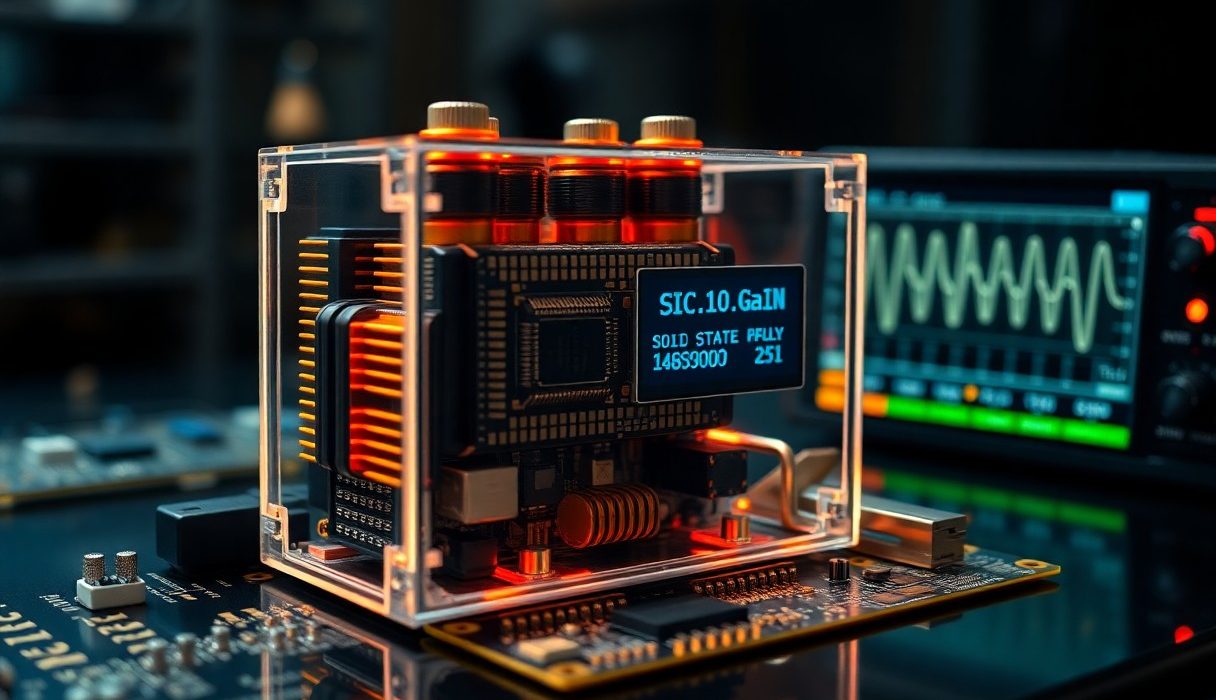
Trends in solid state relay technology show you how next-generation SSRs will reshape control systems: integration with IoT and predictive diagnostics will let you optimize uptime, while greater switching speeds and improved reliability deliver performance gains; however, you must address thermal runaway and cybersecurity risks that can threaten safety and operation, and adopt robust thermal management, monitoring, and secure communication to protect your systems.
Types of Solid State Relays
Several architectures dominate the market and you should match each Solid State Relay type to your application constraints: isolation need, switching speed, load type, and fault tolerance. Below are the principal families and how they map to common use cases and failure modes.
- Opto-Isolated Relays – galvanic isolation using LED + photodetector for safe mains switching
- Non-Opto-Isolated Relays – direct-coupled MOSFET or IGBT outputs for low-voltage/high-speed DC switching
- AC SSR (zero-cross) – optimized for resistive AC loads with zero-cross switching to reduce EMI
- DC SSR (MOSFET) – low RDS(on) packages for battery systems and power electronics
- Hybrid Relays – combine mechanical contacts and semiconductor elements to minimize contact wear and switching losses
| Type | Typical characteristic / example |
| Opto-Isolated | Isolation 1.5-4 kVrms, off-leakage 1-10 mA, common for 24-600 V AC mains switching |
| Non-Opto-Isolated | No galvanic isolation, RDS(on) 10 mΩ-200 mΩ, switching <1-50 μs for MOSFET designs |
| AC SSR (zero-cross) | Zero-cross turn-on reduces inrush EMI, best for resistive heaters and lamps, ratings up to 100 A |
| DC SSR (MOSFET) | Low conduction loss for DC loads, bidirectional MOSFET arrays enable reverse-current blocking |
Opto-Isolated Relays
When you need isolation between control and load, opto-isolated relays remain the standard: devices commonly specify isolation of 1.5 kVrms to 4 kVrms and meet safety classes for industrial mains. In practice you’ll see off-state leakage currents of about 1-10 mA for phototriac-based AC SSRs, which means small indicator circuits or sensing networks can still receive current when the relay is “off”. Manufacturers typically rate these modules for 2-25 A in compact packages and up to 100 A with heat-sinking, so you can select by both current and thermal design.
Because the input uses an LED and the output a photodetector or phototriac, switching behavior usually falls in the microsecond-to-millisecond range and zero-cross variants further reduce EMI for resistive loads. You should design with the expected leakage and snubber requirements in mind: for example, motor drives and inductive loads often require RC snubbers or external di/dt control to prevent false triggering and excessive dissipation. Strong isolation simplifies compliance testing, but the presence of leakage current and internal thermal limits are the primary operational constraints.
Non-Opto-Isolated Relays
For low-voltage power switching and where you can accept a common reference, non-opto-isolated relays (usually MOSFET- or IGBT-based) provide much lower on-state losses and far faster switching-you’ll find RDS(on) values from roughly 10 mΩ to 200 mΩ, and switching edges measured in sub-microseconds to tens of microseconds. These characteristics make them ideal for DC loads, battery systems, or high-frequency PWM applications where efficiency matters: for instance, a 50 A MOSFET SSR with 20 mΩ RDS(on) dissipates about 20 W at full current, which dictates heat-sink sizing and thermal interface design.
However, because there’s no galvanic isolation, your system design must handle common-mode voltages and protect users and downstream electronics: you’ll typically see these used inside enclosures where the control logic shares the same ground as the power stage. Paralleling MOSFETs to increase current capacity requires matched thermal coefficients and current sharing strategies to avoid single-device overstress, and you should verify avalanche and SOA ratings for inductive switching.
Thermal management and fault handling are the operational focus for non-opto solutions: you should include accurate temperature sensing, current limiting, and fast fault detection to prevent thermal runaway, and design snubbers or active turn-off circuits when switching inductive loads-Any design that removes isolation demands strict protective measures such as reinforced insulation on control wiring, redundant monitoring, and compliance checks against applicable safety standards.
Step-by-Step Guide to Selecting Solid State Relays
Selection Checklist
| Step | Details & Examples |
| Define load type | Identify resistive vs inductive loads, AC vs DC, steady-state current and peak inrush (motors/lamp loads can see 5-10× inrush). Example: a 3‑phase motor with 40 A run current and 200 A starting surge needs an SSR with high surge rating or hybrid solution. |
| Current & voltage ratings | Choose continuous current ≥ 25-50% derating above your measured load; verify peak/surge rating (e.g., 10 ms or I2t). Typical SSR on‑state drop is 0.8-1.6 V (use P = Vdrop×I to size heat sinking). |
| Control input | Match input voltage/current, optocoupler CTR, and need for DC- or AC-compatible drivers. Typical input drive 2-20 mA; check for built-in LED series resistor requirements. |
| Switching characteristics | Decide zero‑cross (best for resistive AC heating, reduced EMI) vs random‑turn ON (required for phase-angle dimming). Switching times vary-AC SSRs often switch within a few ms. |
| Thermal management | Calculate dissipation (example: 1.2 V × 25 A = 30 W) and select heat sink/thermal interface accordingly; confirm junction-to-case and case-to-heatsink thermal resistances. |
| Off-state leakage & snubbers | Check off‑state leakage (typical 1-5 mA for AC SSRs) and whether an internal snubber exists; leakage can keep low-current circuits partially energized-add bleed resistor or mechanical relay if needed. |
| Isolation & safety | Verify isolation rating (commonly 2,500 Vrms), required safety approvals (UL, IEC 60947, CE), and creepage/clearance for your working voltage and altitude. |
| Environmental & lifecycle | Account for ambient temp, enclosure class, switching frequency, and lifecycle (SSRs have no moving parts and can deliver millions of operations; check MTBF and manufacturer thermal derating curves). |
Assessing Application Requirements
Begin by cataloging your load profile: steady current, expected peak/inrush, duty cycle and whether the device is predominantly resistive or inductive. For instance, electric heaters drawing 8-12 A are predictable resistive loads, while induction motors often present 4-8× starting currents-if your motor runs at 40 A steady, you should target an SSR or hybrid that handles at least a 50% higher continuous current and a high surge rating.
Next, quantify environmental and safety constraints: ambient temperature, enclosure ventilation, altitude derating, and required approvals (UL508, IEC 60947). Use manufacturer thermal curves to map allowable current at your maximum ambient; failing to provide adequate heatsinking leads to overheating and premature SSR failure, so plan mounting and thermal interface materials accordingly.
Evaluating Relay Specifications
Focus on continuous current, peak/surge capability, on‑state voltage drop, off‑state leakage, control input specs, isolation voltage, and switching mode. Concrete examples: an SSR with 25 A continuous rating and 1.2 V on‑state drop will dissipate 30 W at full load (P = Vdrop×I), so you must select a heat sink that keeps case temperature within the SSR’s allowed range; isolation ratings are commonly 2,500 Vrms, and input LED drive is often 5-20 mA depending on model.
Also examine special features: zero‑cross SSRs reduce inrush EMI and are preferred for resistive heating, whereas random‑turn on devices are required for phase-angle control of motors or dimming. Pay attention to off‑state leakage-typical values of 1-5 mA can cause unexpected heating or partial operation of low-current loads; when leakage is unacceptable, pair the SSR with a mechanical contactor or add a bleed resistor.
Practical checks before purchase: require continuous current rating ≥ 1.25× your measured operating current, surge/I2t rating ≥ expected inrush, and clearly documented thermal resistance (RθJC and RθCS). If your design demands high switching frequency, verify specified maximum switching cycles and manufacturer MTBF; insufficient surge capacity or thermal margin can cause immediate failure, while selecting a properly derated SSR yields silent operation and long lifecycle advantages.
Factors Influencing Solid State Relay Performance
You must balance electrical and thermal parameters to get predictable SSR behavior – switching speed (microseconds to milliseconds), on-state voltage drop (typically 0.8-2.5 V for power devices), and leakage current (µA to mA) all affect system accuracy and safety. In practice, a SSR with a 1.2 V on-state drop at 25 A dissipates ~30 W, so your thermal path and heatsinking determine whether that device meets lifetime targets.
Design choices such as packaging, control-driver voltage, and snubber networks shape switching losses and EMI; overtemperature and overcurrent are the most dangerous failure modes to mitigate through derating and thermal design. Use manufacturer derating curves and confirm isolation voltage for your application before final selection.
- Switching speed
- Load current
- Thermal resistance
- Voltage rating
- Control drive
This interplay between electrical stress and thermal management dictates real-world SSR reliability and performance.
Load Types
When you deal with different load classes, behavior changes radically: resistive loads (heaters) are predictable and allow continuous conduction, while inductive loads (motors, transformers) produce voltage spikes and phase shifts that demand snubbers or zero-cross switching and can require TVS or varistor protection. For capacitive loads and power supplies, expect inrush currents that can be 10×-30× steady-state and force you to size the SSR and fusing accordingly.
In practice you should select SSRs with appropriate turn-on characteristics: choose random-turn-on or phase-angle for motors, zero-cross for resistive heating, and add external RC snubbers or active clamps for inductive environments. Field examples show incandescent lamp circuits repeatedly tripping SSR thermal limits unless inrush is managed with NTCs or soft-start modules.
- Resistive
- Inductive
- Capacitive
- Inrush current
- AC vs DC
Thou must account for inrush multipliers (typically 5-15× for lamps, 2-4× for motor starts) and apply appropriate derating or current-limiting strategies.
| Switching speed | Microseconds-milliseconds; impacts EMI and control precision |
| Load type | Resistive vs inductive vs capacitive determine snubber/zero-cross needs |
| Thermal resistance | Case-to-ambient and junction temps set continuous current limits |
| Isolation voltage | Safety spec (e.g., 2.5-4 kV) affecting creepage and PCB layout |
| Ambient conditions | Temperature, humidity, vibration influence derating and coating requirements |
Environmental Conditions
Ambient temperature ranges and humidity drive derating curves: many SSRs are specified for operation from roughly -40°C to +85°C, but full-load rating is commonly given at 25°C and must be reduced as ambient rises – typical industry practice is to consult the datasheet derating curve, which often reduces allowable current linearly above 25-40°C at about 1-2% per °C. You should locate SSRs near airflow or attach them to heatsinks to keep junction temperatures below limits and avoid premature failure.
Condensation and corrosive atmospheres accelerate degradation; conformal coating or selecting devices rated to IP65-IP67 for outdoor use prevents shorts from moisture and salts. Vibration and thermal cycling cause solder and terminal fatigue, so you should validate installation with vibration profiles and cycle testing representative of your application.
More detailed thermal management-proper torque on mounting screws, use of thermal interface materials with thermal conductivity >1 W/m·K, and monitoring case temperature with thermistors-lets you predict life; in field trials, adding a modest heatsink reduced case temperature by 25-35°C under continuous 20 A loads and extended mean time between failures substantially. This level of control is what separates short-lived designs from robust ones.
Pros and Cons of Solid State Relay Technology
| Pros | Cons |
|---|---|
| Silent operation, no contact noise or bounce – ideal for precision lab and consumer applications | Off-state leakage (typically microamps to a few milliamps) can allow small currents through loads, causing unintended heating or pilot currents |
| Fast switching: turn-on/off in microseconds to milliseconds (MOSFET SSRs in µs, AC zero-cross SSRs ~1-10 ms) | Significant heat dissipation: at 25 A with 0.02 Ω R_on you may see ~12.5 W lost, requiring heatsinks and thermal management |
| Very high cycle life – manufacturers rate many SSRs for tens to hundreds of millions of cycles | Potential fail-short mode; unlike mechanical relays, SSRs can fail closed, creating a fire/safety risk if not protected by fuses or monitors |
| Excellent for PWM and precise phase control in temperature and motor drives (improves stability and repeatability) | Higher initial cost per channel versus simple electromechanical relays, though TCO often improves with reduced maintenance |
| Low maintenance and long MTBF – reduces downtime in industrial automation (fewer scheduled replacements) | Not ideal for switching very low currents or highly capacitive loads due to leakage and dv/dt sensitivity |
| No contact wear or arcing – suitable for frequent on/off duty (e.g., 1 Hz or faster cycling in industry) | Voltage drop and on-resistance introduce continuous power loss (P = I²R or V_drop × I) which must be budgeted into system thermal design |
| Compact, lightweight modules reduce panel space – useful when scaling to many channels (rack or distributed control) | Diagnostics differ: you lose visible contact cues and often need electronic status monitoring to detect failures |
| Suitable for harsh environments where mechanical contacts would corrode or stick (salt spray, vibration) | Some SSR types provide optical or galvanic isolation; others rely on semiconductor coupling – verify isolation ratings for safety-critical systems |
Advantages
You gain measurable lifecycle and control benefits: many SSRs are specified for tens to hundreds of millions of switching cycles, dramatically reducing maintenance compared with electromechanical relays that often live in the 10^4-10^7 cycle range. In practical terms, replacing a mechanical contactor used for cycling a 3 kW heater at 230 V (≈13 A) every 1-2 years can be avoided when you use an SSR; the SSR will typically only require periodic thermal and electrical checks, not contact replacements.
Your control precision improves when you adopt SSRs for PWM and phase-angle control. For example, MOSFET-based DC SSRs switch in microseconds for tight duty-cycle control in battery systems, while AC zero-cross SSRs eliminate contact bounce and electromagnetic interference during switching, improving repeatability and reducing control-loop noise in industrial furnaces and food-processing ovens.
Disadvantages
You must manage thermal realities and off-state behavior: SSRs produce continuous losses (for AC types, a small forward voltage drop; for DC/MOSFET types, R_on) that translate to heat. As an example, a 25 A SSR with 0.02 Ω on-resistance generates about 12.5 W of heat at full load, forcing you to design proper heatsinking and derating at elevated ambient temperatures.
Risk mitigation is necessary because SSR failure modes differ from mechanical relays. Whereas a contact weld is visible and often fails open, SSRs can fail short; you should pair SSRs with upstream fusing, overcurrent detection, or redundant architectures in safety-critical systems to prevent sustained energization and potential fire hazards.
Additionally, off-state leakage (commonly µA to mA) and sensitivity to dv/dt mean you may need snubbers, bleed resistors, or rearranged load circuits for accurate zero-power states-particularly when switching neon indicators, small pilot lamps, or high-impedance sensors. Evaluating datasheet specs for leakage, turn-on thresholds, and thermal resistance will help you choose the right SSR topology and protection scheme for your application.
Tips for Maximizing the Lifespan of Solid State Relays
To extend the service life of your solid state relays, prioritize managing heat and transient stress: many SSRs are rated at nominal current at 25°C and require significant derating as case temperature rises, so specify a heat sink or forced-air cooling that keeps case temperature at least 20-30°C below the component’s maximum. In practice, a 25 A SSR that operates near 70°C will often need to be limited to roughly 12-15 A compared with its 25°C rating; always consult the device’s derating curve in the datasheet and verify with thermal measurements under worst-case load.
- Mount SSRs on a correctly sized heat sink and use the manufacturer-recommended thermal interface material to minimize thermal resistance.
- Install snubber networks or RC filters and use MOV or TVS devices to suppress transients and limit inrush current.
- Follow specified mounting torque values and maintain proper board or panel spacing to preserve electrical isolation and cooling.
- Choose fuses or circuit breakers sized for SSR fault modes and avoid undersizing conductors that increase heating.
The most effective single preventive step is to design in adequate thermal margin from the start rather than relying on emergency cooling later.
Proper Installation Techniques
When you install an SSR, ensure intimate thermal contact: apply a thin, even layer of the recommended thermal interface compound and tighten the mounting screws to the torque range provided by the manufacturer (commonly around 0.5-1.0 N·m for panel-mount terminals). In retrofit examples where electromechanical relays were swapped for SSRs, adding a heat sink area of ~300 cm² plus a small axial fan reduced case temperature by 25-30°C and allowed the SSRs to operate near rated current without early failure.
Additionally, separate your control wiring from load runs and use shielded or twisted control pairs to limit EMI coupling into SSR inputs; route high-current conductors away from the SSR control terminals to lower induced voltage. Follow IEC creepage/clearance guidance for the working voltage and use insulated standoffs or barriers when mounting multiple SSRs close together to prevent cross-heating and maintain safe isolation distances.
Regular Maintenance Practices
Schedule inspections at least annually in normal environments and every 3-6 months in high-vibration, high-dust, or high-humidity installations; during each check you should record case temperature under load, inspect terminals for discoloration or corrosion, verify mounting screw torque, and replace degraded thermal interface material. Use infrared thermography to detect hot spots-if the SSR case runs more than ~20°C above the expected steady-state temperature for a given load, plan corrective action.
Keep maintenance logs that track operating hours, peak currents, and observed Vdrop across the SSR; when the on-state voltage increases by more than ~20% versus the baseline or the device shows intermittent switching, you should replace the unit rather than risk an unplanned failure. In one field study, systems that implemented scheduled thermal cleaning and re-torqueing extended SSR life from an average of 3-4 years to over 8 years under similar duty cycles.
More detailed checks you can perform include on-load Vdrop measurements with a calibrated current clamp and voltmeter (compare to initial factory values) and targeted cycle-count tracking-if an SSR is rated for 100,000 switching cycles under a given load, consider a proactive replacement plan at ~70-80% of that count when operating near rated current to avoid end-of-life failures.
Future Innovations in Solid State Relay Technology
Advances in wide-bandgap semiconductors and embedded electronics are pushing SSR capabilities beyond simple on/off switching: you will see modules that combine SiC or GaN switching elements with integrated gate drivers, temperature sensors, and current monitors to deliver higher switching speeds and lower losses. In practical terms, that means switching frequencies moving from single-kilohertz into the low-hundreds-of-kilohertz or even low-megahertz range for select applications, enabling smaller passive components and tighter control loops in motor drives and power supplies.
Manufacturers are also addressing thermal and safety failure modes you need to manage: designs now include active thermal management, built-in overcurrent/overtemperature shutdown, and diagnostics that report status via Modbus, EtherCAT or OPC UA. Because SSRs can fail short, these safeguards – plus integrated solid-state fusing and hardware watchdogs – are becoming standard so you can maintain safe operation without adding bulky external protection.
Emerging Features
Expect SSRs to adopt system-level intelligence: on-board RMS current sensing with ±1% accuracy, ambient- and junction-temperature monitoring to within ±1-2°C, and self-test routines that log switching events and derating history to non-volatile memory. Vendors are prototyping modules that expose sampled waveforms and fault flags over standard industrial networks, so you can feed SSR telemetry directly into condition-monitoring platforms and predictive-maintenance algorithms.
At the device level, wide-bandgap transistors will enable lower conduction losses and smaller heat-sink footprints; for example, SiC-based SSRs rated to 1200 V are already common in traction and inverter applications, while GaN devices promise reduced switching loss at higher frequencies for mid-voltage converters. Designers are pairing these semiconductors with integrated snubbing, dv/dt filtering, and customizable turn-on profiles so you can tune electromagnetic interference and inrush behavior without external parts.
Anticipated Industry Trends
You’ll find SSR adoption accelerating in high-cycle and precision applications-robotics, semiconductor tools, EV fast chargers, and renewable-energy inverters-because SSRs eliminate mechanical wear and can deliver tens to hundreds of millions of cycles where electromechanical relays are typically rated from 10^4 to 10^7 operations. Standards-driven demand for functional diagnostics (IEC 61508 / SIL awareness in product lines) will push suppliers to offer redundancy, cross-checks, and certified failure modes so you can integrate SSRs into safety architectures.
Supply-chain and manufacturing shifts are also reshaping product choices: as GaN and SiC wafer production scales, you should expect smaller, lower-cost high-performance SSRs to appear, and PCB-level SSRs that replace discrete contactors in space-constrained equipment. Interoperability will matter more too-support for protocols like OPC UA, MQTT, and time-sensitive networking (TSN) will let you aggregate SSR health data into your digital twins and factory-automation stacks.
Operationally, plan for a transition in procurement and maintenance practices: specify SSRs with embedded diagnostics and fail-safe shutdown, require clear MTBF and derating curves from vendors, and update electrical protection schemes because SSRs can present different failure modes than mechanical relays. Training for your engineering and maintenance teams on thermal management, snubber design, and communication-enabled fault analysis will deliver the fastest ROI as these innovations become mainstream.
To wrap up
Hence you should expect solid state relay technology to accelerate toward wide-bandgap semiconductors (GaN, SiC), greater integration, and higher switching speeds that reduce losses and shrink form factors; you will also see improved thermal management and packaging that let you increase current density while simplifying system-level cooling. You can rely on built-in sensing, diagnostics, and protection features to provide real-time load visibility and enable predictive maintenance that reduces downtime and simplifies service.
As you design future systems, plan for SSRs to become smarter and more connected, with embedded controllers, standard communication interfaces, and enhanced firmware capabilities that support remote configuration and grid-aware functions; this will require you to address EMI mitigation, transient protection, and secure software update practices. Wider standardization and improved reliability will make SSRs an increasingly attractive replacement for electromechanical relays across industrial, automotive, and consumer markets, so you should adapt your component selection and validation processes accordingly.